Thursday

Sweet Sandwiches For Everyone!

NSW1


Dear All,

It’s been just 4 months since I started blogging, and the experience along with the learnings have been just great. It’s been a beautiful journey this far. Thank you for the appreciation, for considering my entries to your events, the awards and those notes of encouragement that you have been leaving behind for me every time you’ve visited my chow chronicles. Thanks for the enthusiasm and knowledge each of you has spread through your entries, events and recipes making folks to post tons of yummy stuff for the rest of us to drool over and want more.

As my appreciation for each one of you I have known and to those who have helped me in this world of food blogging, I decided to treat you to something sweet on my chow chronicles.

“Cake, tiramisu, kheer?” were some of the possibilities I was considering, but I wanted to make something really simple yet different, something unique yet flavorful. I felt like an artist facing a white canvas, with the challenge to bring imagination to life:).

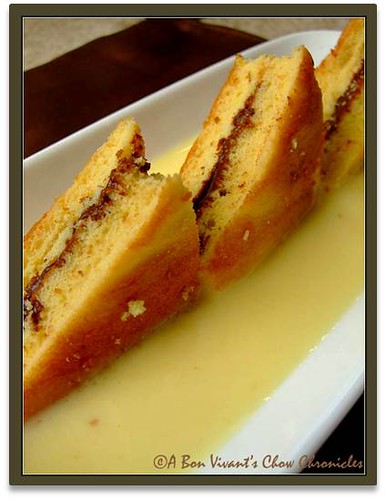
I thought to use regular ingredients in a different way for this creation of mine. It was then that an idea of making sandwiches for dessert sprang up. I have always felt that Nutella was better in a dessert than as a spread for breads and rolls for breakfast. I utilized this opportunity to do just that. Since sandwiches usually dry out, I thought custard would be a good addition as a dip.

One option I had was to use store bought white bread as my base for the sandwiches, but felt the flavors wouldn’t hold up well and moreover it was mundane. So I decided to head straight to my freezer for the batch of homemade cake mix (for moist yellow vanilla cake)that I had prepared over the weekend. An inventory of the pantry revealed that I had to make a quick run to the grocery store to get some of the ingredients I felt would be a perfect addition.

Once back, I decided to bake the cake, with just one difference - I poured out the batter on a cookie sheet to get a thin layer of cake (to get that authentic sandwich look – the brown color on either side). For the dip, I decided to use tapioca pudding (sugar free, fat free). But instead of using it as a dip, I thought to blend it a little with rice milk and use it as a bed for my sandwiches. This would avoid the sandwich from drying out .

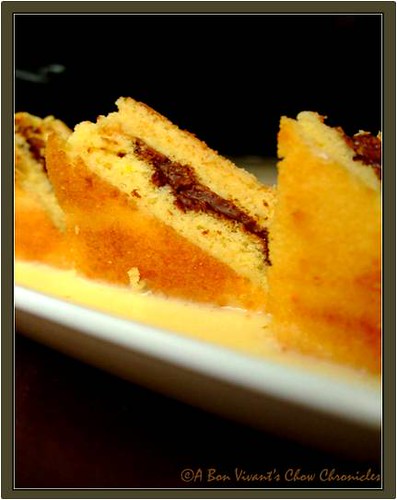
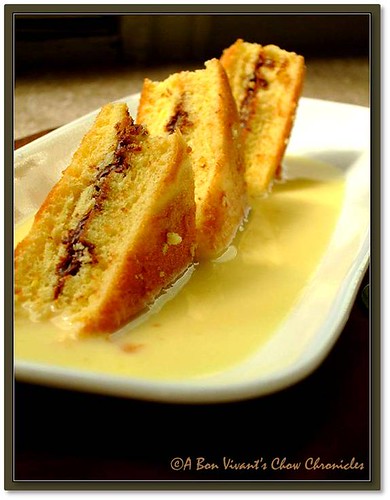
When the cake was done, I cut squares out of the layer and combined two squares together using Nutella. Then I diagonally cut these squares and got them looking like real sandwiches...just the way I had imagined them to be.

I always keep a batch of homemade cake mix in the freezer. I sieve the ingredients listed below, together, and store the resultant mix in a ziptop bag in the freezer. And use a cup or two for any recipe that calls for a cake mix. Alternatively, store bought cake mix would also work for this recipe.

½ cup unbleached organic white flour
¼ cup organic whole wheat pastry flour
½ cup sugar
1 teaspoons baking powder
¼ teaspoon salt
(I use sea salt)

I usually make small batches, and the longest I have stored this mix is 5 weeks. To make chocolate cake, I add around ½ cup of cocoa powder to the mix, while sieving.
NSW2

Ingredients
For the cake

1 cup cake mix
1 ½ tablespoon Sunflower Oil
¼ cup Rice milk ( You could use soy milk or regular milk)
½ teaspoon Vanilla extract
¼ cup egg replacer (I used Ener-G Egg replacer)
¼ cup water

For the pudding bed

1 tablespoon rice milk
1 cup fat free, sugar free Tapioca pudding

For the sandwich

1 -2 tablespoon Nutella


NSW3
A closer look at the Nutella!


Method
Method for Cake

Preheat oven to 350F. Prepare a cookie sheet with cooking spray and/or parchment paper. Set aside.

Add 1 cup of cake mix into a mixing bowl. Add oil, egg replacer, rice milk and vanilla extract. Blend on medium for 2-3 minutes using an electric beater. Then beat for 2-3 minutes on low till a clump-free smooth batter forms.

Spread the batter on the previously prepared cookie sheet. Using a spatula even the layer of batter on the sheet.

Bake for 15-20 minutes, till a knife or toothpick inserted comes out clean. (In my case, the top of the cake was nice and yellow when just done). Allow to cool for 5-10 minutes.

Method for pudding bed

In a mixing bowl, add tapioca pudding and rice milk. Using an electric beater, blend on low for 1-2 minutes, till a homogenous mixture forms. Set aside at room temperature.

To make the sandwiches

Cut the layer of cake into squares. On the top yellow side spread lightly a layer of Nutella. Seal this side onto the yellow side of another square. Repeat till all squares are used up.

Divide diagonally each square to get two triangles.

On a serving plate, spread the pudding. Place each triangle at right angles to the surface of the plate.


Microwave the dessert 10 -15 seconds before serving, if you like it warm. To add a little more pizzazz, dust cocoa powder on top of the triangles or place a mint leaf. I took me under 50 minutes to prepare this.

I decided to make the recipe for cake, egg-free, for the benefit of those who’d like to avoid egg. The tapioca pudding I used was egg free and milk free.

This one's for all of you,so cheers and enjoy!

Last but certainly not the least, Dhivi thank you very much for the award and encouragement, I truly appreciate it! Cheers!

award

I'd like to pass this on to Bee & Jai (sorry, know you've received it already, but i'm resending it because you guys are just awesome with your blog), Suganya, Sunita & Marta.

Best,
Eskay.

p.s: Sorry for the real lengthy post:)

Tuesday

A Note of Thanks for the Award.

nice_matters1

Saswati at Potpourri has awarded me with the "Nice Matters Award" - Nice Matters Award is for those bloggers who are nice people; good blog friends and those who inspire good feelings and inspiration. Also for those who are a positive influence on our blogging world.

This means a lot to me and I truly appreciate it. Thank you Saswati.

I'd like to send this over to Ramya @ Mane Adige and Linda @ Out of the Garden .

A List Of Speciality Ingredients

Cooking is truly a constant learning process - the new terms, new ingredients and newer ways of cooking the same ingredients- all contribute to our knowledge base, every day. Though some ingredients are common throughout, there are some that are specific to or typical of a particular cuisine. Knowing these ingredients and the method to use them goes a long way in our journey through the world of food. A compilation of all of these into one comprehensive list is always welcome in my kitchen. So as an add-on to my previous running list of Cooking Terms, I created a second running list with a few of the speciality ingredients , that I have come across from various recipes and cookbooks. Thought I'd share this with you, as previously promised.

A

abóbora - This Brazilian pumpkin, is a member of the squash family.
allspice—The berry of a West Indian tree, used whole or ground. The flavor of allspice resembles a combination of cinnamon, nutmeg, and cloves.
aniseed—Is the seed of the anise herb, which gives food a strong, aromatic flavor similar to that of black licorice. Aniseed is also called anise seed.
anise—The spice made from the seeds of anise, an herb that grows in the Mediterranean region. Its flavor is similar to black licorice.
apple cider vinegar—A vinegar made from apple cider.
avocado—The pulpy green or purple fruit of the tropical trees of the family Lauraceae. The tree is native to Mexico, Central America and Guam.

B

bulgur—Kernels of wheat that have been steamed, dried, and crushed.
barley—A whole grain that is often used to thicken soups.
basil—A rich, fragrant herb whose fresh or dried leaves are used in cooking.
bay leaf—The dried leaf of the bay tree (also called European laurel).
bittersweet chocolate—Dark chocolate made with less sugar than milk chocolate.
blanched almonds—Almonds with the thin brown skin removed.
bouillon cube—A compressed mixture of spices, seasoning, oils, and often a meat extract, used to make broth and add flavor to other foods.
bread crumbs—Pieces of stale bread broken into small chunks by crushing the bread. buttermilk—Cultured milk made by adding a certain bacteria to sweet milk.

C

capers—The small buds of a shrub that grows in the Mediterranean region and in Asia. Theyare usually pickled in vinegar .
caraway seed—The whole seeds of an herb of the parsley family, used to flavor foods.
cardamom seed—A spice of the ginger family, used whole or ground, that has a rich aroma and gives food a sweet, cool taste.
cassava flour—Flour made from the starchy root vegetable cassava, also called yucca.
catupiry - Soft, mild and creamy Brazilian cheese, with high fat content.(Contributed by Chef Paula)
cayenne pepper
—Dried red chilies (hot peppers) ground to a fine powder.
chard—A leafy green plant of the beet family.
chickpeas—A type of pea with a nutlike flavor. Chickpeas are also called garbanzo beans.
chives—A member of the onion family. The thin, green stalks are chopped and used as a garnish and a flavoring.
chorizo—Pork sausage.
cilantro—An herb used fresh or dried as a flavoring and garnish.
cinnamon—A spice made from the bark of a tree in the laurel family. Cinnamon is available ground or in sticks.
cloves—The highly fragrant dried flower buds of a tropical tree, used whole or ground as a spice.
coconut milk—A rich liquid made by simmering shredded coconut meat with milk or water.
converted rice—Rice that has been treated to preserve much of its nutritional value and that is fluffy when cooked.
coriander—An herb used ground as a flavoring or fresh as a garnish. Fresh coriander is also known as cilantro.
cornstarch—A fine white starch made from corn, commonly used to thicken sauces and gravies.
crushed red pepper—The dried crushed seeds and skin of a hot red pepper, used to season foods.
cumin—The ground seeds of an herb in the parsley family, used in cooking to give food a smokey flavor.
currants—Small, dried, seedless grapes similar to raisins.

D

dendê oil—The strongly flavored oil from the dendê palm tree, native to Africa.
dry mustard—A powder, made from the ground seeds of the mustard plant, that is used to flavor food.

E

eggplant—A vegetable with shiny, purple-black skin and light-colored flesh.

F

farina—A fine meal made from grain. It is used chiefly for puddings or as a breakfast cereal.
fennel—A plant with stiff, stalky stems similar to celery that produces seeds used to flavor foods. The stalks may be used in soups and salads.
feta cheese—A soft, crumbly white cheese that is commonly made with goat’s or sheep’s milk. Has a distinctive, salty taste.
field bean—A variety of white bean native to the Middle East. Also called Egyptian field beans.
fig—A sweet, ripe or dried fruit with many tiny seeds.
fish sauce - An extract derived from either dry or raw fish that has been allowed to ferment. (Contributed by Chef Paula)
G

gingerroot—A knobby, light brown root used to flavor food.
ground ginger—A tangy, aromatic spice made from the underground stem of the ginger plant.
ground rice—Rice that has been ground to a fine, flour like consistency.
ground round—Very lean ground beef.

H

hearts of palm—The tender stems of certain palm trees. Hearts of palm are available in the canned food section of most grocery stores.
hummus—A thick paste made of ground chickpeas, spices, and ground sesame seeds.

K

kale—A hardy, curled-leaf cabbage that does not form a dense head.


L

leek—An edible plant, related to the onion, that has a white bulb and long, dark green leaves.
lemon extract—A liquid made from lemons that is used to flavor foods.

M

mace—An aromatic spice made from the fibrous covering of a nutmeg.
malagueta—A Brazilian chili, or hot pepper.
manioc—A tuber (root vegetable), similar to the potato. Also called as cassava or yucca. (farinha de mandioca- Manioc flour , polvilho- Manioc starch).
mint—The leaves of any of a variety of mint plants, used fresh or dried in cooking.

N

nutmeg—A fragrant spice, either whole or ground, that is often used in desserts.
nigella seeds—A black, aromatic seed sprinkled on bread and pastries. Also called Black Cumin. nutmeg—A fragrant spice that is often used in ground form in desserts.

O

olive oil—An oil made by pressing olives, used in cooking and for dressing salads.
orange flower water—A flavoring made from distilled orange blossoms.
oregano—The dried leaves, whole or powdered, of a rich and fragrant herb that is used as a seasoning in cooking.
oyster sauce - Carmelized sauce prepared by cooking oysters in water till the broth condenses. Used in Chinese & Thai cooking. (Contributed by Chef Paula)


P

papaya—A tropical fruit with bright orange flesh. Papayas have a strong flavor that is both sweet and tart.
paprika—A red seasoning made from the ground, dried pods of the capsicum pepper plant.
parsley—A green, leafy herb used as a seasoning and as a garnish.
parsnip—A white root vegetable that looks like a carrot and tastes like parsley.
phyllo dough—A flaky pastry rolled into paper-thin sheets that are almost transparent.
pine nuts—A rich, edible seed that grows on some pine trees.
pistachios—A flavorful, light-green nut used to flavor many foods.
pita bread—Flat, round loaves of unleavened bread. When baked, a puffed pocket of air forms in the center of the bread.
plantain—A starchy fruit that resembles a banana but must be cooked before it is eaten.

Q

quinoa—A highly nutritious pearl-like grain used in soups and salads.

R

red lentils—Tiny, orange-red legumes used to make soups and spreads in Mediterranean and Indian cuisine.
red wine vinegar—Vinegar made from red wine. Wine vinegars usually have a sharp, tangy taste, with a deep flavor.
rice flour—A flour made from ground rice.
rice wafers—Thin crackers, made from rice flour, that are used in Turkish desserts.
rosemary—The strongly flavored dried leaves of an herb in the mint family, used as a seasoning for meat, fish, and other dishes.
rose water—A liquid distilled from rose petals that is used to flavor food.

S

saffron—A spice, made from part of a crocus flower, that has a strong flavor and adds a yellow color to foods.
salt cod—Codfish that has been salted and dried to be preserved for long periods of time.
scallions—A variety of green onion.
sesame oil- Oil derived from toasted,hulled or cold pressed sesame seeds. Also known as gingely oil. Widely used in Southeast Asian cuisine.(Contributed by Chef Paula)
short-grain rice—A variety of rice with thicker grains that cook to asticky consistency.
slivered almonds—Almonds that have been split into thin strips.
Spanish fresh cheese (queso fresco)—A salty white cheese that crumbles like Greek feta or blue cheese, commonly used in Latin American cooking.
spicy brown mustard—A condiment made from mustard seeds, vinegar, seasoning, and spices.
superfine sugar—Sugar that is similar to common granulated white sugar but with finer grains.

T

tahini—A paste of ground sesame seeds.
tarragon vinegar—A vinegar made from a blend of distilled wine vinegars, salt, sugar, herbs, spices, and fragrant tarragon leaves.
thyme—The leaves of a bushy shrub that grows mainly in California and France. It is used as an herb in cooking and has a very strong flavor.
tofu—Fresh soybean curd, sold in cakes. Is a good source of protein.

V

vanilla extract—A liquid made from vanilla beans that is used to flavor food.
vegetable shortening—White, solid vegetable fat.
vegetable stock—A broth made by simmering vegetables in water until they are soft and their flavors and nutrients have been released into the liquid.

W

wasabi - Japanese horseradish with a strong hot flavor,most commonly used as a condiment for sashimi and sushi.white wine vinegar—A vinegar made from white wine.(Contributed by Chef Paula)
whole wheat flour
—Flour made without removing bran from the grain.
wonton wrappers—Thin pastry skins used in Asian cooking.

Y

yucca—A root vegetable, similar to the potato. Also called cassava.
yeast—An ingredient used in baking that causes dough to rise and become light and fluffy.

Z
zaatar—A mixture of wild thyme, sesame seeds, Lebanese sumac seeds, and salt.
zest—The very outer peel of citrus fruits such as lemons, limes, or oranges.


Hope this list is helpful to you as much as it has been to me. Any feedback or contributions to this list is appreciated.

Saturday

Oondi with a twist!

Oondi2
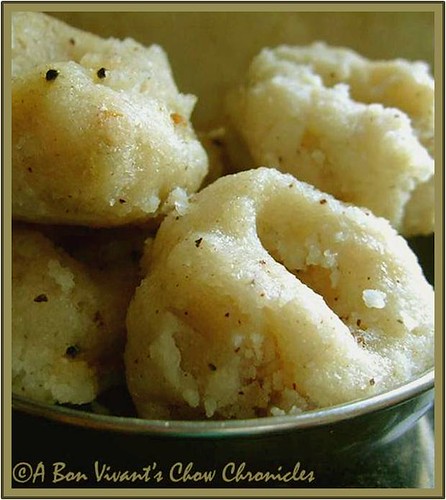
A simple and easy dumpling, Oondi is a always a quick fix breakfast in most Konkani households. The reason - it requires no prior overnight soaking of ingredients unlike idli or dosa. It is similar to a Modak or Kozhukattai, in that it contains rice and is steamed; however, on the contrary, Oondi has forever remained a savory dish.

Coconut is an integral ingredient of the Konkani cuisine, and is included in almost every meal of the day. The main dry ingredients for Oondi are coconut and semolina made from rice, in the ratio 1:2. Traditionally, both these ingredients are ground together with water into a thick batter. The batter is then seasoned with salt along with black mustard seeds, split black lentils, fenugreek seeds and cooked till it stiffens into a thick semi-dry paste. Small dumplings are made of this thick paste and steamed till done. Authentically, plantain leaves are used to steam these dumplings. But with the amenities that a modern kitchen provides, pressure cookers or idli cookers have now replaced the leaves. These dumplings are served hot with a drizzle of fresh coconut oil.

Though I like Oondi as is (strictly without the Coconut oil), I’ve always wanted to try it out with different ingredients. But never got around to do that till one Saturday morning. I decided to make Oondis for breakfast, only to realize that I was running low on the rice semolina. In no mood to drive to an Indian grocery, I decided to modify the recipe and use bulgur. I had previously attempted using regular wheat semolina in place of rice, but the outcome wasn’t anywhere close to appeasing.

Bulgur is made from parboiled, sun –dried wheat and is usually free of bran. Most often used to make Turkish pilafs and Lebanese Tabouleh; it has a nutty flavor and is considered more nutritious than rice. Personally, I find the texture of bulgur (soft white wheat variety) to be very close to the regular semolina and it was the only other alternative my kitchen pantry provided that morning.

So I combined rice semolina and bulgur in the ratio 2:1 for this “modified” version of the recipe. I used a pinch of powdered fenugreek instead of the regular seeds to avoid that burst of bitterness in the mouth. To retain the coarse texture and color of the rice semolina, I chose to grind bulgur with coconut to a fine paste, and then later on add the rice semolina towards the end. To avoid excessive oil, I dry roasted the mustard seeds, and using ½ teaspoon of oil sautéed the split black lentils (peel-off) for 2-3 mins till golden brown.

Oondi1
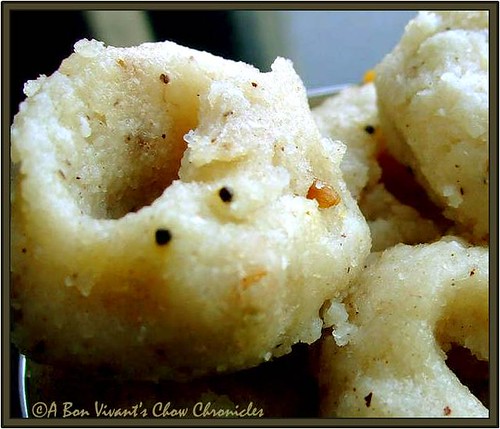
A close up showing the texture of the oondi.

Ingredients

1 cup Rice semolina

½ cup Bulgur
I buy the soft white wheat variety of bulgur from a local Turkish store

¼ cup Coconut, freshly grated
I have reduced the quantity of coconut, than what the recipe actually calls for.

½ teaspoon Oil
You could use Coconut oil if you prefer to. I used regular Olive Oil.

½ teaspoon mustard seeds

½ teaspoon Split black lentil, peel–off (Udad dal)

A pinch of Fenugreek powder
Dry roast fenugreek till the seeds are warm and grind them to a fine powder

Salt to taste

Water


Method

Soak rice semolina in water for 15 minutes. Wash, strain and set aside.

Soak bulgur for 15 minutes in 1 cup of warm water.

Grind together soaked bulgur and coconut to a fine paste, with ¼ cup of water. Do not make the paste into a liquid by adding more water.

Add in the rice semolina and grind to a coarse consistency. Add salt to the paste.

Dry roast mustard seeds for 1-2 minutes. Set aside.

Heat oil in a pan, add black lentils and sauté for 2-3 minutes or till golden brown. Add the previously prepared paste , fenugreek powder and mustard seeds. Now to this mixture add 1½- 2 cups of water, and cook uncovered by stirring continuously, on medium flame, for 10-12minutes. Turn off the flame once done. Cooking is done when the mixture turns stiff.

Prepare dumplings or shape balls using the stiff paste. Make a depression at the top of each so that it cooks evenly and balances itself while steaming. Spread them on plantain leaves or in the container of a pressure cooker and steam covered for 12-15 minutes.

Serve hot with coconut chutney, Indian pickle or sambhar.

The Oondis with bulgur turn out yellow in color when compared to the original recipe. They are best eaten warm and can be stored for up to 12 hours. One cool thing to do would be to cut each of them into quarters, heat oil with chutney powder and toss the quarters in it. Make sure to toss well so that all the quarters are evenly coated.

These Oondis are my entry to Suganya's WBB- Healthy Eats.

Tuesday

Whole Wheat- Banana - Prune Soda Bread Rolls

....quite a mouthful!

Soda Bread 1

Soda breads are classified under “quick breads” as they contain baking soda instead of yeast as the leavening agent. Making quick breads calls for using both dry and wet ingredients that are measured and quantified individually and then mixed together.

For soda bread the wet ingredient is primarily buttermilk, while the dry ingredients include flour, baking soda, at times baking powder and salt. The lactic acid in the buttermilk reacts with baking soda to acidify the dough and produce Carbon Dioxide (CO2) for leavening. As a result the dough rises, as it bakes, just like any other yeast based bread.

Most popular among the soda breads is the Irish version that dates back to the early 19th century, when soda bicarbonate replaced yeast in Ireland. Typically the Irish soda bread has a tough exterior and is loaded with raisins/currants or caraway seeds. For more on the Soda Bread, click here.

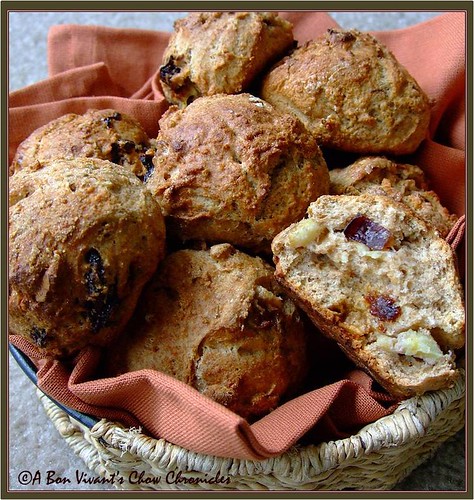
There is a plethora of recipes and versions of the Soda bread available. I love Banana bread and banana-nut muffins, and wanted to bring the same flavor to the soda bread. So keeping some of the basic ingredients like baking soda, buttermilk and salt constant, I gave the bread a twist by blending in banana and crushed walnuts instead of the regular raisins and caraway seeds. To give it some color, I added a few pieces of finely chopped pitted California prunes. For that added rise, I also included a lightly beaten egg. And a dash of cinnamon for the aromatics!

I avoided sugar completely, as both banana are prunes are naturally sweet and provide for the required sugar quotient.

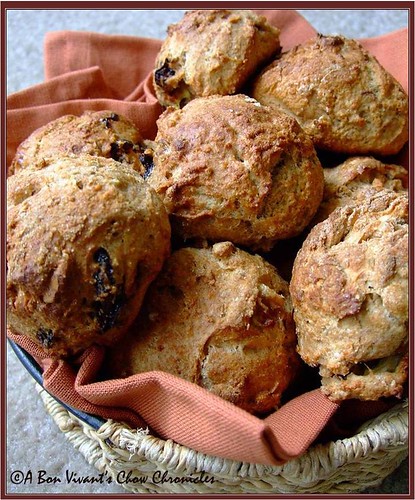
Instead of baking it entirely as a loaf, I decided to bake individual scoops of the dough to resemble rolls or scones. By that I avoided those unruly crumbs and the pain of slicing the loaf - the right way.

Soda Bread 2
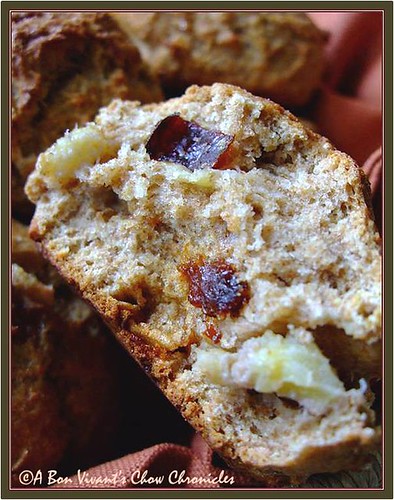
One halved roll to show the texture along with the pieces of chopped prune and diced banana.

Ingredients

3 ½ cups Whole Wheat flour
I always prefer Whole wheat flour (Organic) to All-Purpose flour. To make Gluten free soda bread/rolls use Almond flour or a mixture of Almond Flour and Tapioca Starch (1:1).

1 teaspoon Salt

1 teaspoon Baking soda

2 tablespoon unsalted Butter, melted

1 cup mixture of crushed walnuts, diced banana and chopped prunes
I used 1 medium sized banana, 4-5 halves of walnut, 3 prunes for this mixture.

1 egg, lightly beaten

1 ¼ cups buttermilk

I used home made buttermilk. You could use store bought as well. Click here to learn how to make buttermilk.

A pinch of Cinnamon powder


Soda Bread 3

A close up showing the tough exterior of the roll, along with softer interior with pieces of prunes , banana and crushed walnuts.


Method

Preheat the oven to 400F. Line and prepare a large cookie sheet with parchment paper and set aside.

Sift together 3 cups of wheat flour, salt, baking soda and cinnamon powder into a large bowl.

Melt butter and work into the above mixture till the mixture turns coarse.

Add banana-prune-walnut mixture, buttermilk and beaten egg into the mixture. Mix well using hands or spatula (hard) till dough turns stiff. The dough may be sticky due to the wet ingredients and banana. If so, sprinkle some from the remaining ½ cup of wheat flour. Do so till the dough turns stiff.

Dust wheat flour on a clean dry flat working surface. Roll the dough in the flour by kneading once or twice till a ball can be formed. Make sure not to over knead the dough.

Using an ice-cream scoop or cookie scoop place scoops of the dough 1’’ inch apart on the cookie sheet, prepared previously.

Bake at 400F for 40 minutes or rolls are golden brown. Insert a toothpick or skewer into the center of the rolls ; if it comes out clean then the rolls are done.

Once done, turn off the oven and allow the rolls to stay in it for a few minutes. Remove from oven and allow to cool at room temperature for 5-7 minutes.

Serve warm or sliced with almond butter with tea or chai.

Recipe Yields about 12 rolls.

I bake sparingly, as I'm very much a novice at baking. That said, I truly enjoyed baking this bread, or should I say rolls. The entire process was simple, short and not very messy at all. Both banana and prunes just added the right amount of sweetness and the dash of cinnamon made the rolls smell really yum.

These rolls go perfect with blueberry preserves or almond butter. Since they dry out quick (within 36-48hours), these are best eaten fresh from the oven. If you decide to consume them 24 hours after baking, then slice and warm or toast them a little.

These rolls go out to Suganya's WBB-Heathly Eats.

Monday

Fenugreek'ed Potatoes!


Fenugreek Potato3


The word Fenugreek or Methi (Hindi, मेथी) is not new to cooking. It is believed to be in use as a fodder crop since 2nd century BC and hence named “Greek Hay”. Frequently used both as an herb and a spice, Fenugreek is supposed to control blood sugar levels as well as cholesterol levels. Refer

Methi is available in three forms: fresh green leaves, amber colored seeds, dried greenish-brown leaves. I use the fresh leaves ( when available) to make the authentic Konkani curry called “Methiye-palle-sukke”. Essentially it is fresh methi leaves, sautéed with onions and potato in a coconut based curry.

The methi seeds always find their way into the Idli or Dosa batter (I learnt this from my Mom, to make softer idlis and fluffier dosas). And sometimes in regular drinking water or tempered buttermilk.

My favorite of them all is the Kasuri Methi or dried fenugreek leaves. Being extremely aromatic, the leaves impart a unique flavor when used with regular dals and plain white rice. I make sure the leaves are sautéed well along with other spices, seasoning or sometimes vegetables to release their characteristic fragrance and essence; I find this as an effective way to suppress the bitterness of the leaves.

Fenugreek Potato2


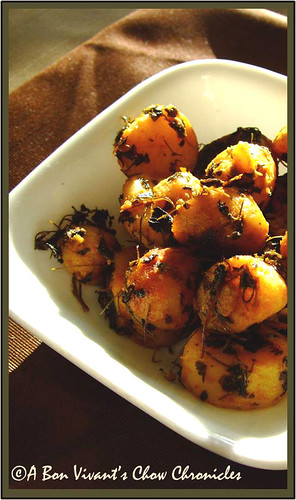
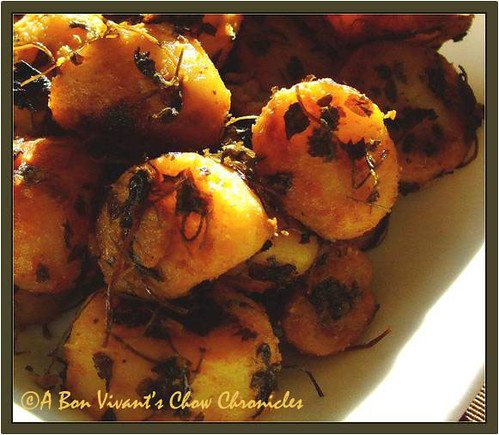
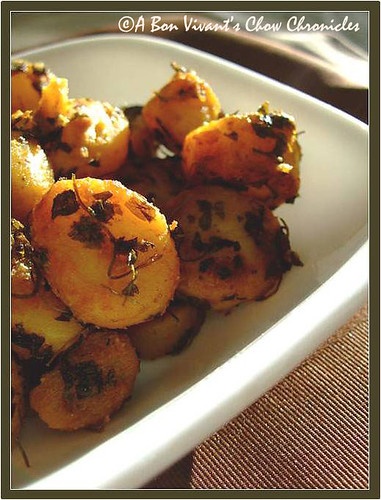
I love pairing Kasuri Methi with potatoes. I consider these Fenugreek'ed Potatoes...as I term them... an offshoot of the "Methiye-palle-sukke", without the coconut and onions. Its an easy and simple side, that pairs well with roti or dal-chaawal( rice and dal). More so for weekday dinners. I typically use fingerling potatoes for this as they are small and easy to dice into bite size discs or cubes.

Ingredients

7-8 fingerling potatoes
2 tablespoons Kasuri Methi
½ teaspoon red Chili Powder
½ teaspoon Coriander-Cumin Powder
2 ½ teaspoons Oil
1/4 teaspoon Amchur or Dry Mango powder ( Optional)
Salt to taste

Fenugreek Potato1

Method

Pressure cook , microwave or boil potatoes till done. Strain and allow to cool. Peel potatoes, cut into small discs or bite size cubes. Sprinkle salt and amchur (optional) and toss well so that the potatoes are evenly coated. Set aside.

Instead of boiling the potatoes you could skin and use raw potatoes. I prefer being conservative with oil, especially when it comes to potatoes, hence boil them and reduce the amount of oil that the recipes call for. If using raw potatoes you may want to increase the amount of oil. Same with the size of the cubes or discs - the smaller the size, the faster the cooking, the lesser the oil.

Amchur provides a tangy flavor to the potatoes. Its entirely optional to use it for this dish.

Heat oil, add the powders, add Kasuri Methi and sauté for 3-4 mins on medium flame using a pan with handle or wok with ears for grip. Add potatoes, mix well by tossing with the help of the ears of the wok or handle of the pan.

Avoid using a spatula to mix to prevent the potatoes from mashing. Caution: Take care not to spill on self while tossing.

Cook on low to medium-low flame, uncovered for 8-10mins, till the potatoes are coated with the fenugreek leaves. Toss every 3-4 mins to ensure the potatoes are evenly coated.

Serve hot with rotis or rice & dal.

Its been raining potatoes this February with Sia ‘s Ode to the Potato and DK’s Potato Fe(a)st. I decided to join in and send these Fenugreek'ed Potatoes to them.

Saturday

Aatte ke Gol

One event I look forward to every month is Bee & Jai's Click. Being an amateur at cooking and photography, this event remains a constant stimulus to sharpen my skills at either art.

When this month’s click called for Flour, it didn’t take me much to decide on the nature of the flour. But it did get me thinking on the aspects of photography.

Though the term “Flour” technically implies a fine powder made by grinding cereal grains or starchy plant material(courtesy:Wikipedia), for most of us it just means “Wheat Flour”.

I love using organic whole wheat flour for its texture and color. I try ways (wherever possible) to replace any kind of flour that a recipe calls for with this one; my favorite of them all : the béchamel sauce using whole wheat flour.

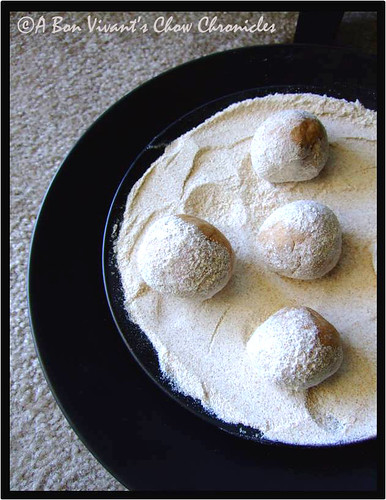
I was keen to portray this flour in its essence as found in my kitchen on an everyday basis. “What better than the rounds or balls of it just the way I do for Rotis”, I said to myself.

So I made some Aatte ke Gol (Aatta = Flour, Gol = Balls or rounds) and tried capturing them just as they look while I make rotis or parathas.

Flour 3

While they were rolled in flour just before flattening...

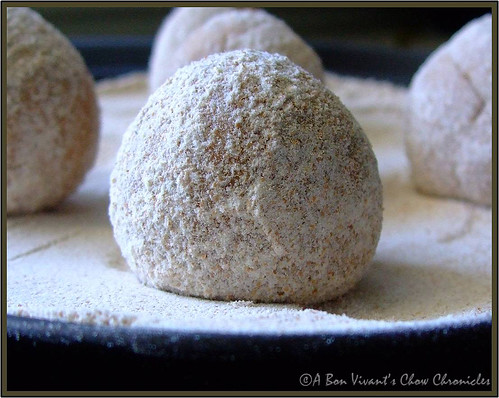
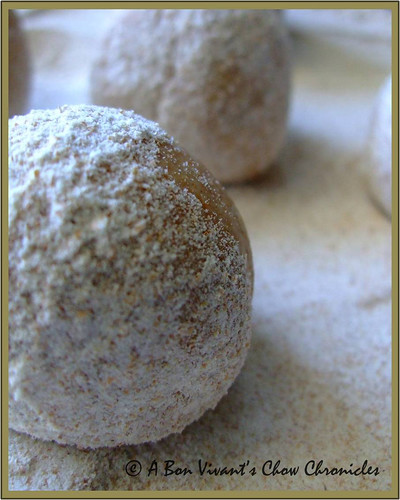
Flour 2

A close up of one of them to distinguish the soft dough and the coarse flour....

Atte Ke Gol

Friday

Glossary - Terms widely used in Cooking

There have been times that I have felt lost reading terms specific to cooking. My mom would keep a dictionary beside her cookbooks, and I followed the same till Google & Wikipedia made things much easier.

To make things very simple, I have been maintaining running lists of cooking terms, types of utensils and description of ingredients compiled from various cook books and recipes that I've come across. Its been handy and of great help.

Friends of mine, with whom I have shared these lists, have also found it useful. Thought I'd share these lists with you as well, starting with this list of terms widely used in cooking.

A
Aging
- The term applied to meat being held at a temperature of 34-36 degrees F. for the purpose of tenderizing.

B
Bake
- To cook by dry heat, usually in an oven.
Baste— To pour, brush, or spoon liquid over food as it cooks in order to flavor and moisten it.
Beat—To stir rapidly in a circular motion.
Blacken- To coat (fish or meat, for example) with pepper and other spices and then quickly sear in a very hot skillet, thereby producing meat that is black on the outside but tender on the inside.
Blanch—To scald, steam, or boil briefly in water.
Blend—To combine thoroughly, or mix, two or more ingredients.
Boil—To heat a liquid over high heat until bubbles form and rise rapidly to the surface.
Braise- To fry (food) lightly and then stew slowly in a closed container.
Broil—To cook food directly under a heat source so that the side facing the heat cooks rapidly.
Broil—To cook food under a direct flame.
Brown—To cook food quickly over high heat so that the surface turns an even brown.

C
Clarify (as in butter) - To separate the milk solids and water from the butter fat.
Coat -To cover the surface of one food with another.
Cream—To blend dry and wet ingredients until frothy.
Cube—To cut food into cube-shaped pieces.
Cure - To preserve and flavor meat or fish, by the addition of a combination of salt, sugar and nitrate and/or nitrite.
Cut in—A way to combine a solid fat, such as butter, and flour using your fingers, a pastry blender, or two knives. Cut or break the fat into small pieces and mix them with the flour until mixture has a coarse, mealy consistency.

D
Dice
—To chop food into small, square pieces.
Drain—To remove liquid from food.
Drippings- The fat and natural juice that drips from roasted meats.
Dust- To sprinkle with flour or sugar.

E
Entrée
- Main course of the meal.
Extract- The essence drawn from certain fruits/food to flavor.

F
Fold—To blend an ingredient with other ingredients by using a gentle overturning motion instead of by stirring or beating.

G
Garnish—To decorate a dish with a small piece of food such as parsley, cilantro or any other herbs or vegetables.
Grate—To cut into tiny pieces by rubbing food against a grater.

H
Hard-boil—To cook an egg in its shell until both the yolk and the white are firm.

I
Infusion- Liquid extracted from tea, herbs, or coffee.

J
Julienne- To cut into long thin strips.

K
Knead—To work dough or another thick mixture by pressing it with the palms, pushing it outward and then pressing it over on itself.

L
Ladle—To dip into and serve foods, especially such liquids as soups, gravies, and sauces, with a long-handled, deep-bowled spoon.

M
Marinate—To soak food in a seasoned liquid in order to add flavor and to tenderize it.
Melt - To dissolve or liquidify by heating.
Mince—To chop food into very small pieces.
Mirepoix - French term to denote a combination of onions, celery, and carrots in the ratio 2:1:1 for cooking.

P
Parboil – To partially boil food in water before it is finished cooking using another method.
Pickle – To preserve food by anaerobic fermentation in brine.
Pickle - To marinate and store food in an acidic solution like vinegar (diluted acetic acid).
Pinch—A very small amount, usually what you can pick up between your thumb and index finger.
Poach - To simmer food in liquid (water, stock or wine).
Preheat—To allow an oven to warm up to a certain temperature before putting food into it .
Puree—To make food into a paste or thick liquid.

R
Reduce – To thicken or intensify the flavor of a liquid mixture by evaporation.
Roast—To cook in an open pan in an oven so that heat penetrates the food from all sides.

S
Sauté
—To fry quickly over high heat in oil or fat, stirring or turning the food to prevent burning.
Scald - To heat milk or cream just below the boiling point until a scum forms on the surface.
Score—To make light cuts on the surface of food without cutting all the way through the food.
Sear – To cook the surface of meat/ poultry/fish at a high temperature to obtain a caramelized crust.
Seed—To remove seeds from a fruit or vegetable.
Separate—To divide one ingredient into two or more parts that will be used separately.
Shred—To cut or tear into thin strips by hand or with a cheese grater.
Sift—To put an ingredient, such as flour or sugar, through a sifter to break up any lumps.
Simmer—To cook over low heat in liquid kept just below its boiling point.
Smoke- To cook by exposing food to the smoke from burning or smoldering plant materials, most often wood.
Steam—To cook food with the steam from boiling water.
Stir-fry—To quickly cook bite-sized pieces of food in a small amount of oil over high heat.

T
Toss - To cause a rising and falling action for the purpose of blending ingredients together as in salads.

W
Whip
—To beat an ingredient, such as cream or egg whites, until light and fluffy.


References:
Easy Menu Ethnic Cookbooks, Minneapolis Lerner Publications.
Wikipedia
Oxford Dictionary


If there are any terms that you'd wish to contribute please feel free to.

Biscuit Roti

..... fried savory Mangalore bread.

Biscuit Roti

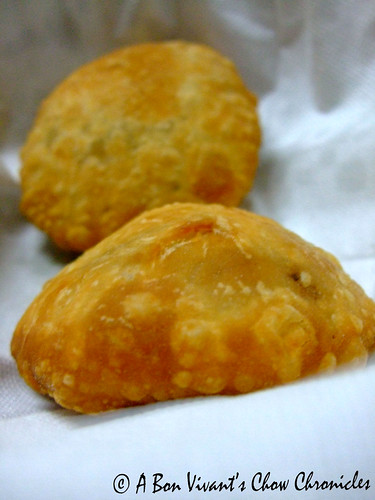
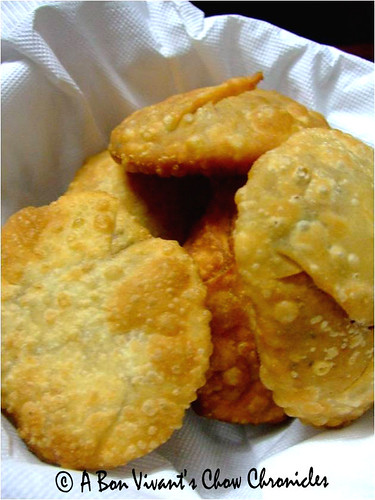
No where close to a biscuit or roti, these Biscuit Rotis or “biskoot rotti” (as know in Mangalore) are a nice alternative to regular pooris. I wonder why they didn’t call it “Masala poori” instead! I like the way one of the Konkani recipe books terms it - “Biscuit Puri”. Neat.

Authentic Konkani cooking calls for these to be fried in coconut oil. I stay away from coconut oil as it has caused me more trouble than good. That’s been a primary reason I’ve always avoided lunch or dinner invitations extended by relatives, while visiting Mangalore. Coconut oil is by default the oil used for cooking. My mom has forever remained a proponent of “Gingely Oil” or “Sesame Oil”. And any deep frying still remains an occasional poori or vadams (“Odis” in Konkani) using sunflower oil.

The only time we eat this is when we visit my parents–in-law or they visit us. Its true that marriage is not only between two individuals and two families, but also between two kitchens!

The first time I visited them, my MIL made these Biscuit Rotis. Here I was, the new bride to be, trying to create an impression and be myself all at the same time, while 20 pair of eyes kept constantly watching every move of mine, in a house packed with relatives near and far.

The thoughts of the dreadful mouth ulcers that coconut oil would cause me were the only things running through my restless mind. All of a sudden, much to my relief, S, my darling husband, declared “Didn’t know these taste so good without coconut oil!”. Pre-planned or sheer coincidence, it continues to remain a mystery to me. MIL still claims that she altered her recipe as she was running short of coconut oil. Well, that worked really good for me and thanks to MIL, I dared to take that first bite of the most revered Konkani “tiffin” - Biscuit Roti.

My MIL’s recipe is a hit not only among us, her friends and family but also everyone my side of the family. So, I decided to include this on the chow chronicles, for all those of you who love Biscuit Roti and get nostalgic with this humble Mangalorean snack.


Biscuit Roti 3

Ingredients

3 cups All purpose flour
1 teaspoon Udad Dal ( split Black gram)
½ cup Semolina ( Sooji Rava)
¼ cup grated Coconut or dry Coconut powder
2 roasted, dry Red Chilies
¼ cup Curry leaves
½ teaspoon Asafoetida
4 teaspoons of Oil
Salt
Oil for frying
Water for kneading

Biscut Roti1

Method

For the dough:

Knead flour, salt and 1 teaspoon of oil together using water into a dough. Set aside at room temperature.

For the Filling:

Dry roast coconut, curry leaves and red chilies. Grind to a coarse powder, without adding water.

Heat 3 teaspoons of oil in a pan on medium flame, add Udad dal, curry leaves and asafoetida. Allow the channa dal to turn golden brown .

Reduce flame and add the ground mixture. Sauté for 3-4 minutes on low flame.

Add semolina and salt into the mixture and cook for 3-4 minutes till all the ingredients bind together into a semi dry mixture. Remove from flame and cool to room temperature.

To make the Biscuit Rotis:

Make small balls of the dough. Roll them into small circles.

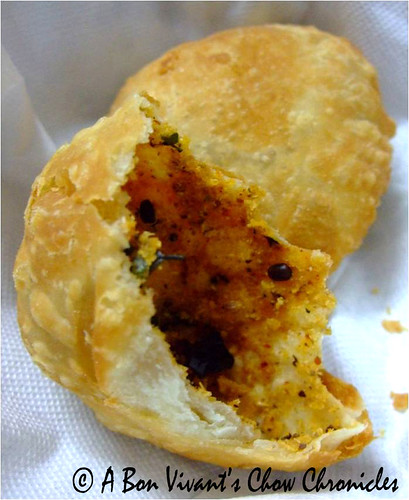
Place a teaspoonful of the filling at the center of the each circle. Gather the edges of the dough towards the center to cover the filling.

Flatten out the biscuit roti, like regular pooris, but smaller.

Heat oil, deep fry each biscuit roti till golden brown and crisp.

Drain excess oil using absorbent tissue. Serve hot.

Biscuit roti can be served as is or along with coconut chutney. The recipe yields nearly 10-12 small biscuit rotis.