I’ve been on and off on the blog for a while now ...a self imposed break... to realign my approach towards choosing foods. It all started one Saturday morning with a visit to the local farmer’s & organic market. What started as a thought has now become a weekend ritual to visit these markets, interact with the local growers and buy produce that is chemical free and locally grown.
In pursuit of this I have been able to interact with farmers and taste a whole variety of farm fresh produce and foods in various places in India and here in Texas. It’s been a healthy and refreshing change from a plastic bag loaded with chemically induced produce from the regular grocery stores. The one-on-one interaction with the famers is what has made this experience unique.
As an initiative to promote organic farming and the local produce A Bon Vivant Chow Chronicles has decided to go organic and local with all produce and ingredients - wherever possible- used for recipes mentioned here. Any exceptions from this will be mentioned. The earth tones of the Chow Chronicles are in alignment to promote earth friendly farming and local farmers.
My journey started in Mangalore, India. In search of local produce, I had to travel just 5 miles from the city to meet a local farmer who has been growing coconuts and jackfruits for 30 years and has been selling produce to my grandmother’s family. With no fertilizers and just manure, his simple farming was the closest I could get to organic, in the region. Mangalore has bloomed into a city from the small town it was half a decade ago. With high rises on every street, bustling traffic, malls and a huge growing population, I was overcome with mixed feelings seeing a town so close to my heart change so rapidly.
At the farm, I got to know about two different varieties of jackfruit- a harder milder variety and a softer sweeter one. On tasting a sample of each, I decided to buy the softer sweeter variety. After a short walk through this farm of 200 coconut trees and 15 huge jackfruit trees, I was treated to a cup of coffee made with jaggery.
Though a little too sweet for my taste buds, it had this strong earthy flavor to it that got me curious to know how it was prepared. That’s when I came to know that the farmer used for fresh cane juice for this recipe of home-made jaggery. Prepared without any additives or chemicals, it had this outstanding rich unrefined texture and color to it. To go with the coffee I was also offered pieces of crushed jaggery with coconut as a snack. You could say I had a double- double of jaggery! In all my purchase didn’t stop just at the jackfruit; I also purchased a small bag of the home-made jaggery and a few coconuts.
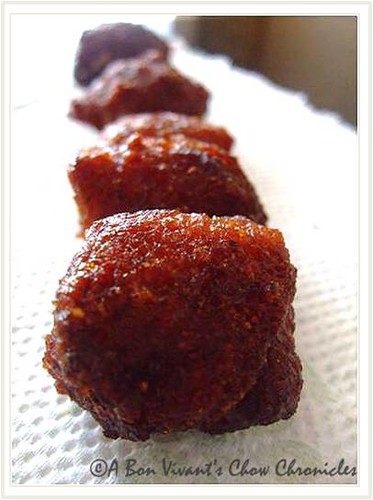
Once I got home, I knew just exactly I wanted to do using the jackfruit and the jaggery. My grandmother (on my mother’s side) is an awesome cook. She has been the inspiration behind my love for Konkani cuisine. In spite of the tiredness from frequent bouts of wheezing, she was eager to make some “Moolik” (fried jackfruit dumplings with coconut and jaggery) for me as much as I was eager to eat them. Though there may be many different recipes to this Moolik, this is my favorite more so because this has a special ingredient – my grandmother’s love- and it has been something I’ve looked forward to in summers ever since I was little.
In pursuit of this I have been able to interact with farmers and taste a whole variety of farm fresh produce and foods in various places in India and here in Texas. It’s been a healthy and refreshing change from a plastic bag loaded with chemically induced produce from the regular grocery stores. The one-on-one interaction with the famers is what has made this experience unique.
As an initiative to promote organic farming and the local produce A Bon Vivant Chow Chronicles has decided to go organic and local with all produce and ingredients - wherever possible- used for recipes mentioned here. Any exceptions from this will be mentioned. The earth tones of the Chow Chronicles are in alignment to promote earth friendly farming and local farmers.
My journey started in Mangalore, India. In search of local produce, I had to travel just 5 miles from the city to meet a local farmer who has been growing coconuts and jackfruits for 30 years and has been selling produce to my grandmother’s family. With no fertilizers and just manure, his simple farming was the closest I could get to organic, in the region. Mangalore has bloomed into a city from the small town it was half a decade ago. With high rises on every street, bustling traffic, malls and a huge growing population, I was overcome with mixed feelings seeing a town so close to my heart change so rapidly.
At the farm, I got to know about two different varieties of jackfruit- a harder milder variety and a softer sweeter one. On tasting a sample of each, I decided to buy the softer sweeter variety. After a short walk through this farm of 200 coconut trees and 15 huge jackfruit trees, I was treated to a cup of coffee made with jaggery.
Though a little too sweet for my taste buds, it had this strong earthy flavor to it that got me curious to know how it was prepared. That’s when I came to know that the farmer used for fresh cane juice for this recipe of home-made jaggery. Prepared without any additives or chemicals, it had this outstanding rich unrefined texture and color to it. To go with the coffee I was also offered pieces of crushed jaggery with coconut as a snack. You could say I had a double- double of jaggery! In all my purchase didn’t stop just at the jackfruit; I also purchased a small bag of the home-made jaggery and a few coconuts.
Once I got home, I knew just exactly I wanted to do using the jackfruit and the jaggery. My grandmother (on my mother’s side) is an awesome cook. She has been the inspiration behind my love for Konkani cuisine. In spite of the tiredness from frequent bouts of wheezing, she was eager to make some “Moolik” (fried jackfruit dumplings with coconut and jaggery) for me as much as I was eager to eat them. Though there may be many different recipes to this Moolik, this is my favorite more so because this has a special ingredient – my grandmother’s love- and it has been something I’ve looked forward to in summers ever since I was little.
At the end of a fun vacation in Mangalore, I was sad to leave and amongst all the other things I wished and hoped for is that this small farm remains intact without being engulfed into the realms of concrete world around it.
Now for the recipe......
Moolik

Ingredients
2 cups Jackfruit (pulp) de-seeded and chopped (Caution: Jackfruit as a whole has a tough exterior and a sticky interior. Oil hands before cutting the fruit to prevent the gum from sticking to your hands and get remove the pulp from the sheath)
½ cup Rice, soaked over night
1 cup Coconut, freshly grated
1 cup Jaggery, crushed
2 teaspoons Cardamom, crushed
½ teaspoon Sea Salt
Water
Oil
Method
Drain excess water from rice. Grind rice, jackfruit, jaggery, cardamom and coconut into a coarse thick semi-dry batter. Avoid adding water in excess to prevent batter from turning watery. Make sure the rice is coarse/grainy and not completely ground.
Add salt, mix well.
Heat oil till warm and add in spoonfuls of batter, one at a time, into the oil. Cook on medium-low flame till golden brown.
Drain off excess oil using absorbent paper. Serve warm.